Fleet overview
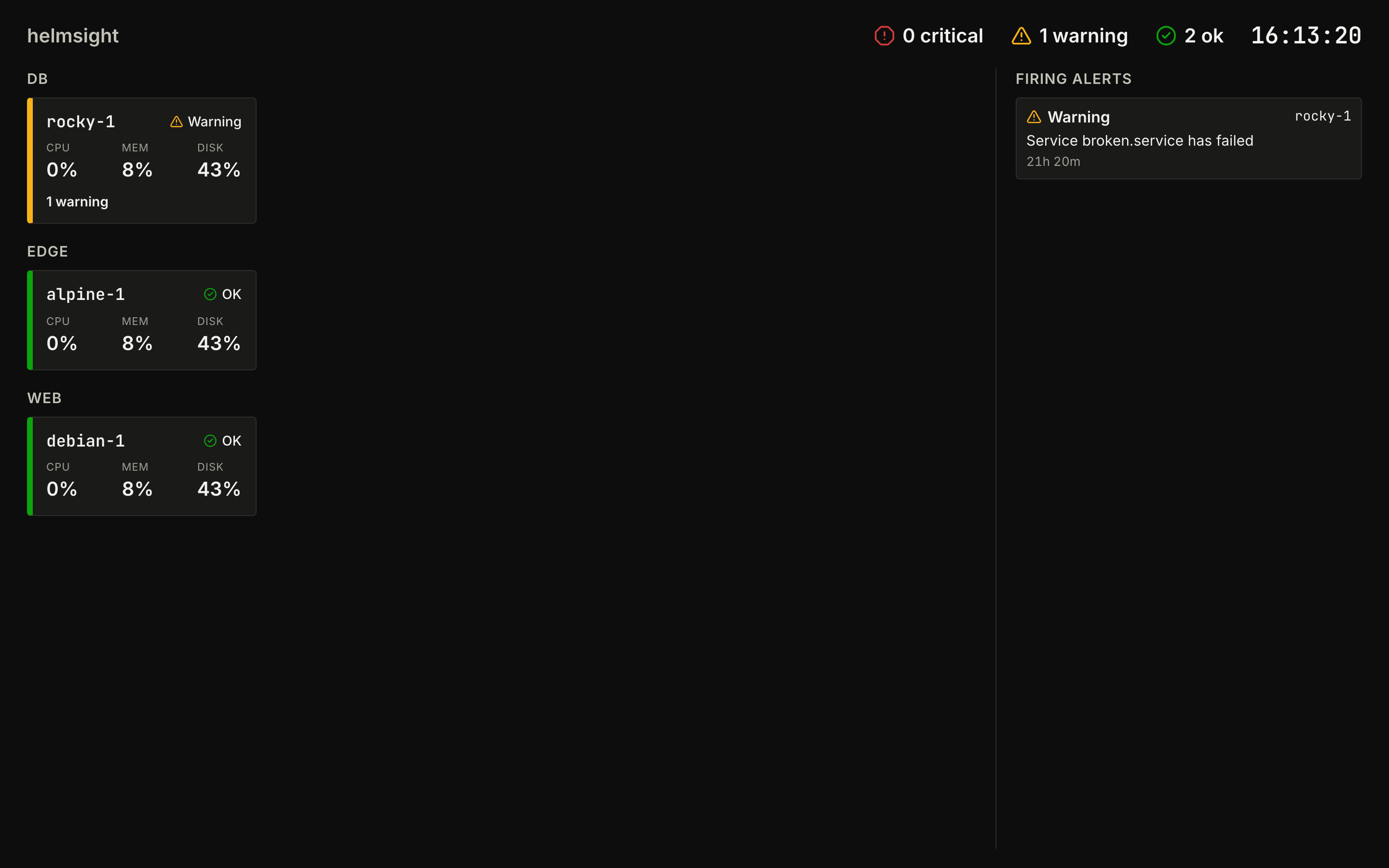
Status, CPU, memory, load, fullest disk, network and alerts for every host. Groups, tags, search and sparklines. "Down", "auth failed", "host key changed" and "partial" are distinct states.
Open source · MIT · Linux
helmsight is a single binary that monitors a fleet of Linux servers over plain SSH. It collects metrics and inventory with read-only commands, keeps history locally and serves a fast, calm web dashboard. No agents, no daemons, no files written on your servers.
Early development (0.x). Tested on six Linux distributions, but with little production use and no independent security audit yet; configuration and data formats may change. Try it on non-critical hosts first. Project status
$ helmsight init
$ helmsight hosts test --trust
$ helmsight serve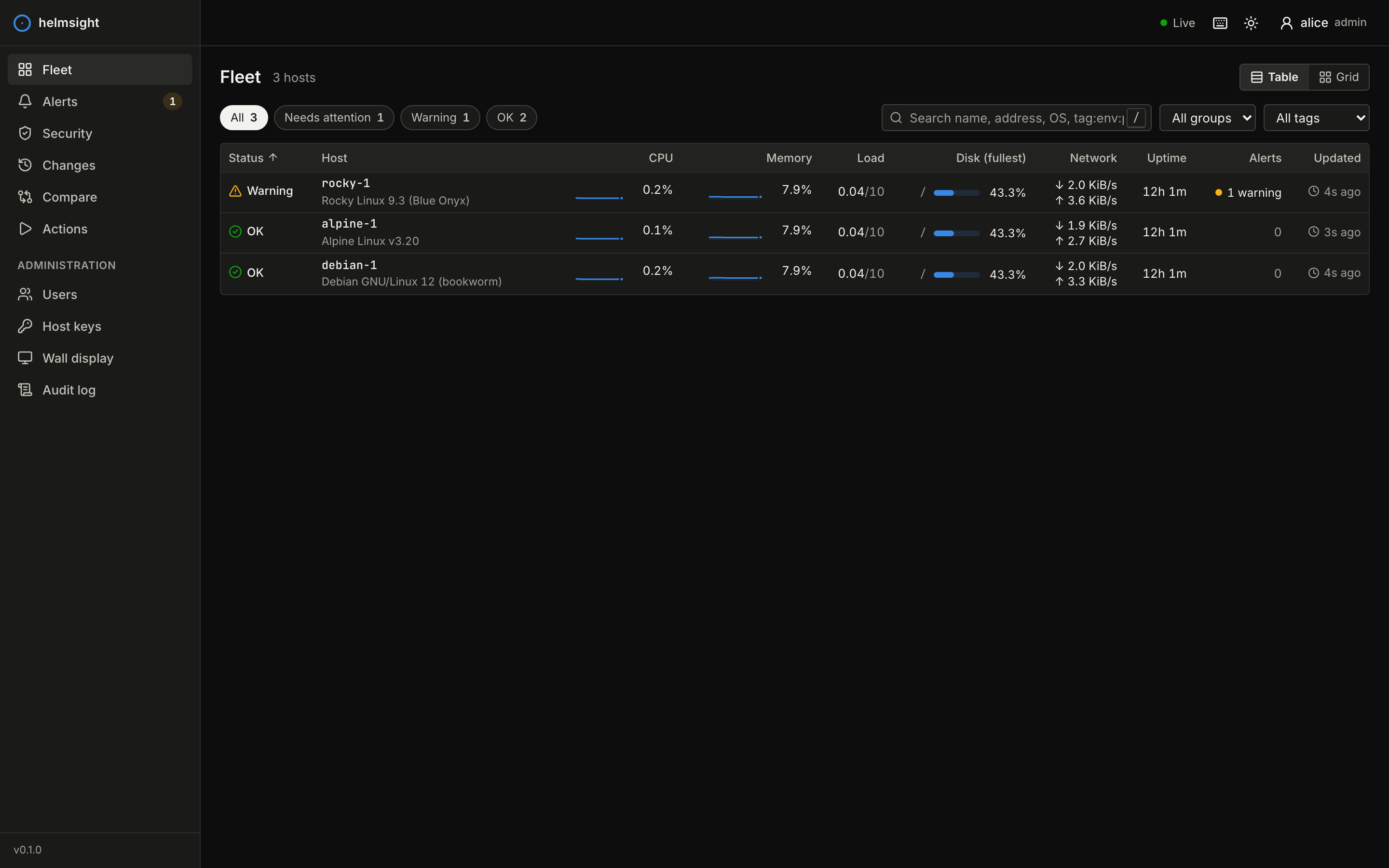
Status, CPU, memory, load, fullest disk, network and alerts for every host. Groups, tags, search and sparklines. "Down", "auth failed", "host key changed" and "partial" are distinct states.
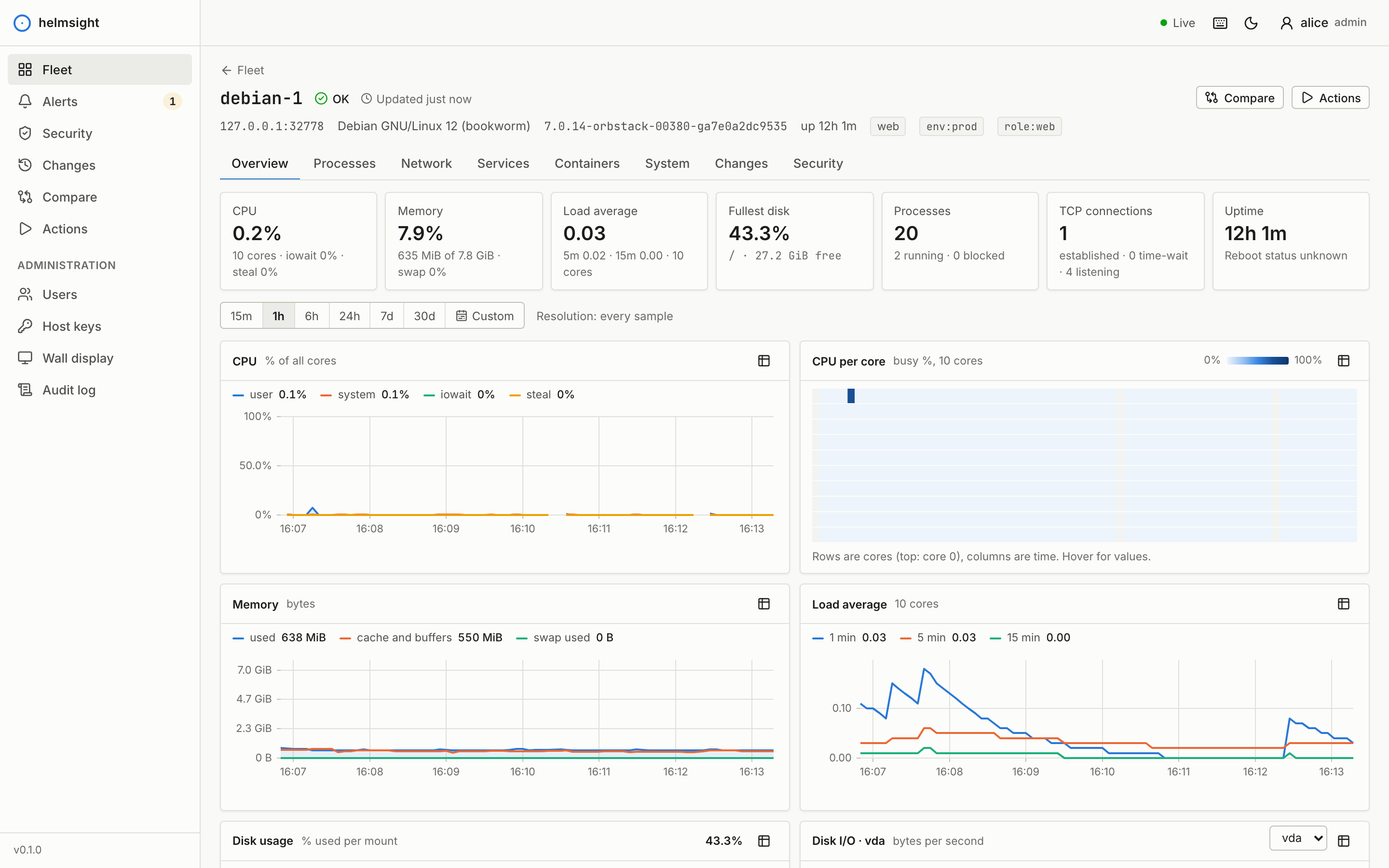
Live and historical charts with a synchronized crosshair, per-core CPU heatmap, top processes, listening ports, services, containers and system information.
Every sample for 24 hours, 1-minute rollups for 7 days, 5-minute rollups for 90 days, in an embedded SQLite database.
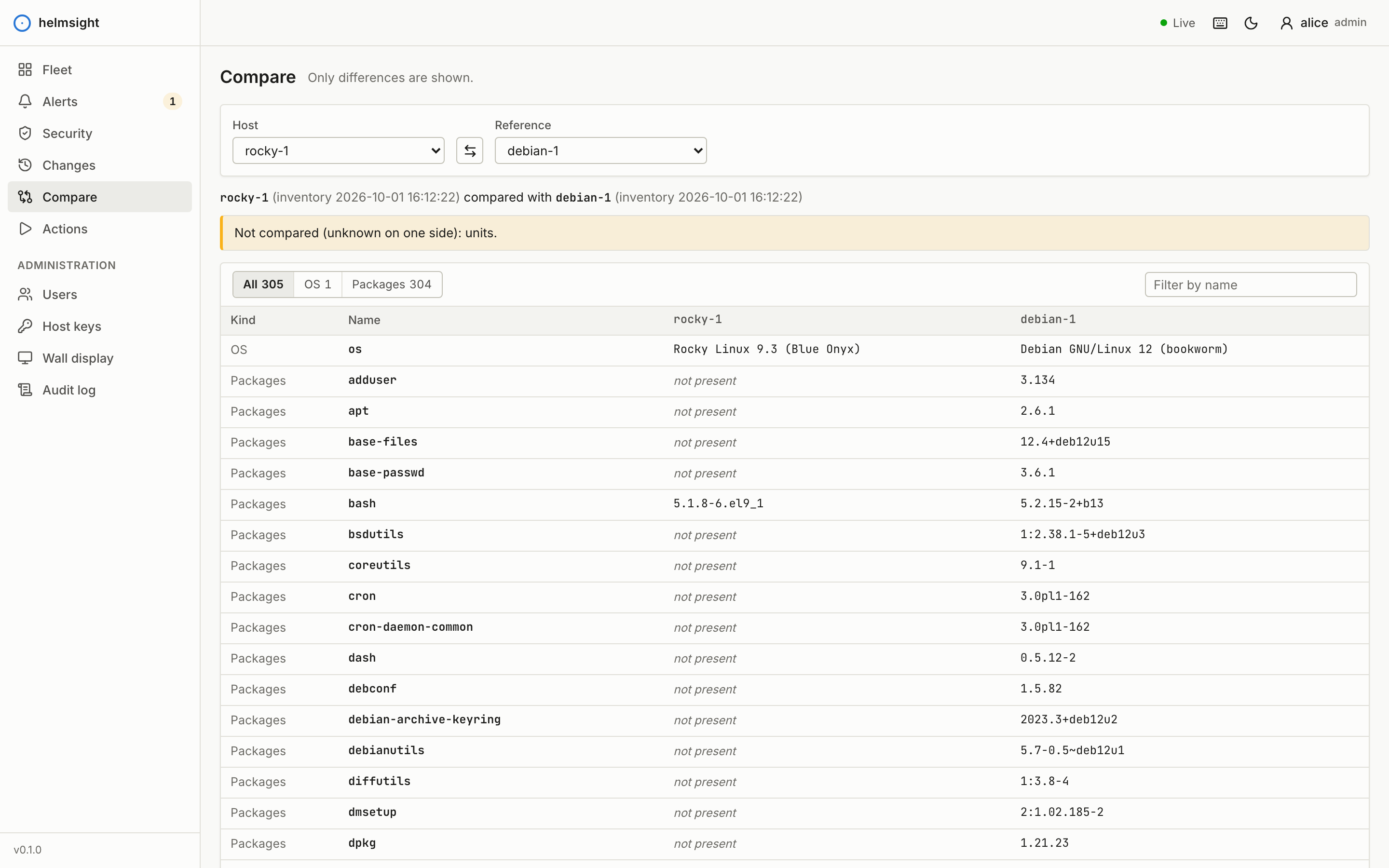
Packages, kernel, ports, enabled units and OS are snapshotted. See what changed since yesterday and compare a host with another host or its baseline.
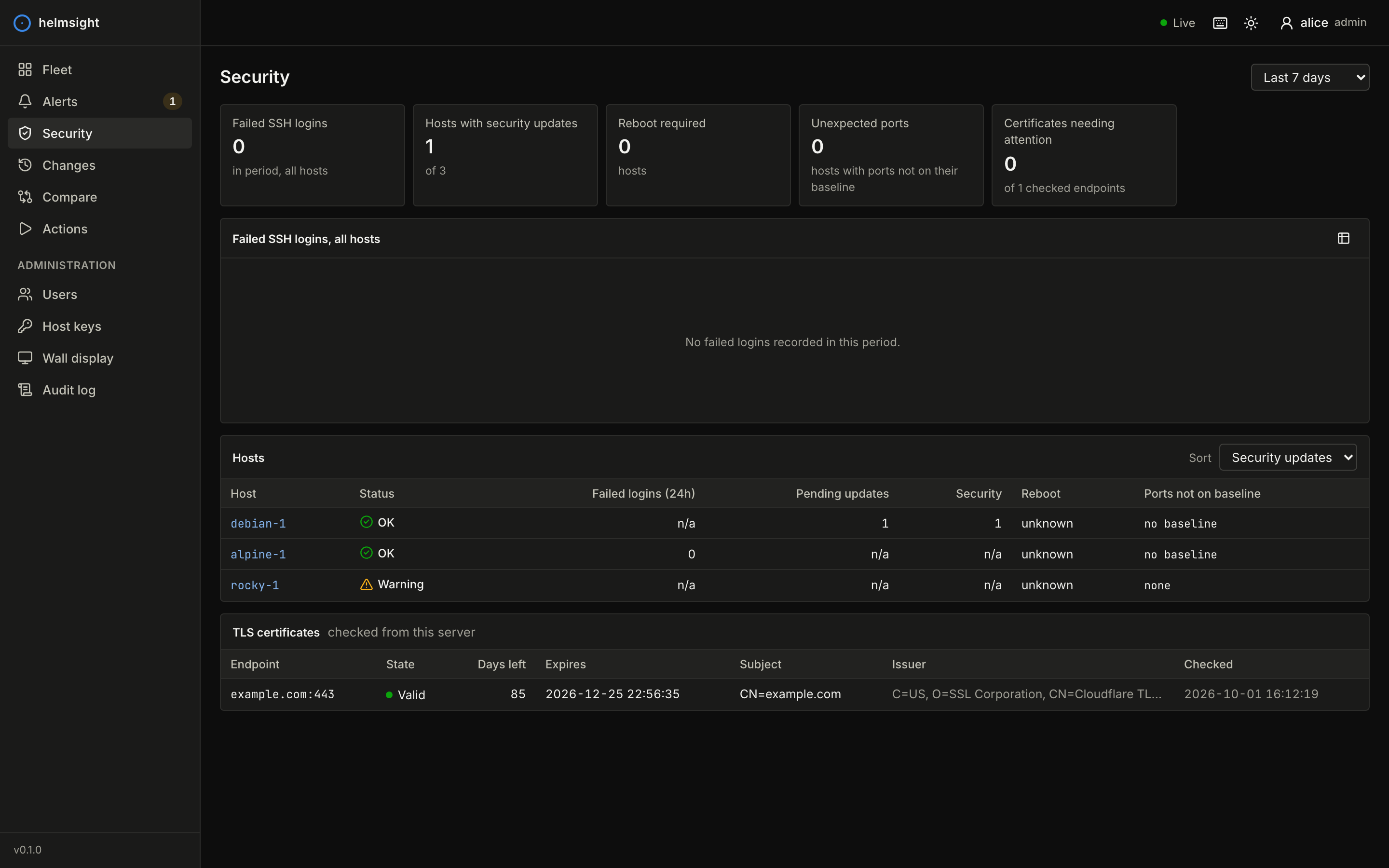
Failed SSH logins, pending security updates, ports not on the baseline, reboot flags and TLS certificate expiry, across the fleet.
Rules like disk_used_pct > 90 for 10m, scoped to groups or tags. Acknowledgements, silences, and webhook, Slack or email notifications.
Let operators restart a service without shell access: fixed commands, a confirmation dialog and a hash-chained, append-only audit log.
Viewer, operator and admin roles, TOTP, OpenID Connect single sign-on, and a wall display for NOC screens with revocable tokens.
/proc, df, ps, ss, systemctl, the package database. Missing tools degrade to "n/a" with a reason.Works on Debian, Ubuntu, RHEL, Rocky, Alma, Fedora, openSUSE and Alpine (BusyBox).
There is no terminal, file manager or command box. Remote output is never rendered as HTML, and a strict Content-Security-Policy forbids inline code.
OpenSSH known_hosts semantics: unknown keys need an admin to confirm the fingerprint, changed keys stop collection and raise an alert.
An unprivileged account with a restricted key is enough. The integration tests verify that nothing is written on the monitored hosts.
Loopback by default, automatic TLS elsewhere, Argon2id, TOTP, SSO, CSRF protection, rate limiting and secrets encrypted with XChaCha20-Poly1305.
On any Linux machine, local mode monitors the machine itself, without SSH or configuration:
$ ./helmsight serve --localTo install it as a service on a server, use the installation script. It verifies the download, asks a few questions and shows what it will do before changing anything:
$ curl -fsSLO https://enderkus.github.io/helmsight/install.sh
$ sudo sh install.sh
Then follow the quick start to add your servers.